
Taiwan-Palau Partnership Promotes Marine Science Education, Strengthening Ocean Conservation Awareness
Supported by Taiwan's National Science and Technology Council (NSTC), the Taiwan-Palau Ocean Science Education Center successfully held a three-day marine science education workshop at Palau Community College from October 8 to 10. The workshop attracted participants from the Ministry of Education of Palau, local elementary and high school teachers, and outreach officer from the Palau International Coral Reef Center. The workshop focused on critical marine issues in Palau, covering topics such as blue carbon, marine food chains, and sustainable ocean development, aiming to enhance the younger generation's awareness of ocean conservation.
The teaching team from Taiwan included Professor Hung-Duen Yang, former president of National Sun Yat-sen University; Distinguished Professor Ching-Chang Hung; Professor Hsiu-Chin Lin; and Professor Mong-Fong Li from National Penghu University of Science and Technology. The course content centered on the impact of climate change on marine ecosystems, focusing on three major themes: the role of blue carbon in achieving carbon neutrality, plankton as indicators of changes in marine ecosystems, and the issue of ocean acidification caused by excessive carbon dioxide emissions.
In addition to classroom lectures, the workshop integrated hands-on activities to deepen participants' understanding. The participants engaged in field teaching at Shark City and Giant Clam City in the Rock Islands, using scientific instruments to monitor real-time changes in water temperature and salinity while collecting water samples from various depths. During these activities, they discovered that at a depth of 15 meters, the water temperature in the Rock Islands reached as high as 30.5°C, even in October. This real-time data provided solid evidence that Palau's ocean waters are continuing to warm, reinforcing the participants' understanding of the ongoing impact of climate change. These experiences will help teachers inspire their students to develop a stronger environmental awareness when they return to the classroom.
Distinguished Professor Ching-Chang Hung emphasized that this was Taiwan's first full-English marine science teaching initiative in a Pacific ally. He expressed hope that grassroots education in Palau would plant the seeds of sustainable ocean development, stressing the urgency of raising public awareness of climate change and encouraging concrete action. The workshop not only helped teachers effectively convey marine knowledge but also aimed to influence the younger generation in Palau to become more actively involved in environmental protection.
During the final sharing session of the workshop, Palau high school teacher Noel Reyes highly praised the teaching methods of the three professors, noting that the course provided him with a fresh perspective on marine science concepts. He also mentioned that as an island nation, Palau needs more hands-on teaching materials to help students better understand the principles of marine science. Viola Nairngetrang suggested extending the duration of the sea-based practical activities to a full day to enhance participants' field experience. Iesha Bieb Umayam further recommended extending the three-day course to a week to allow for a deeper exploration of the long-term impact of climate change on Palau's marine ecosystems and response strategies.
The enthusiastic feedback from participants was heartening for the teaching team, reflecting the shared vision of Taiwan and Palau to address the global challenges of climate change. Moving forward, the workshop will continue to expand the depth and breadth of marine science education, equipping Palau's younger generation with the scientific data necessary to protect our blue planet.
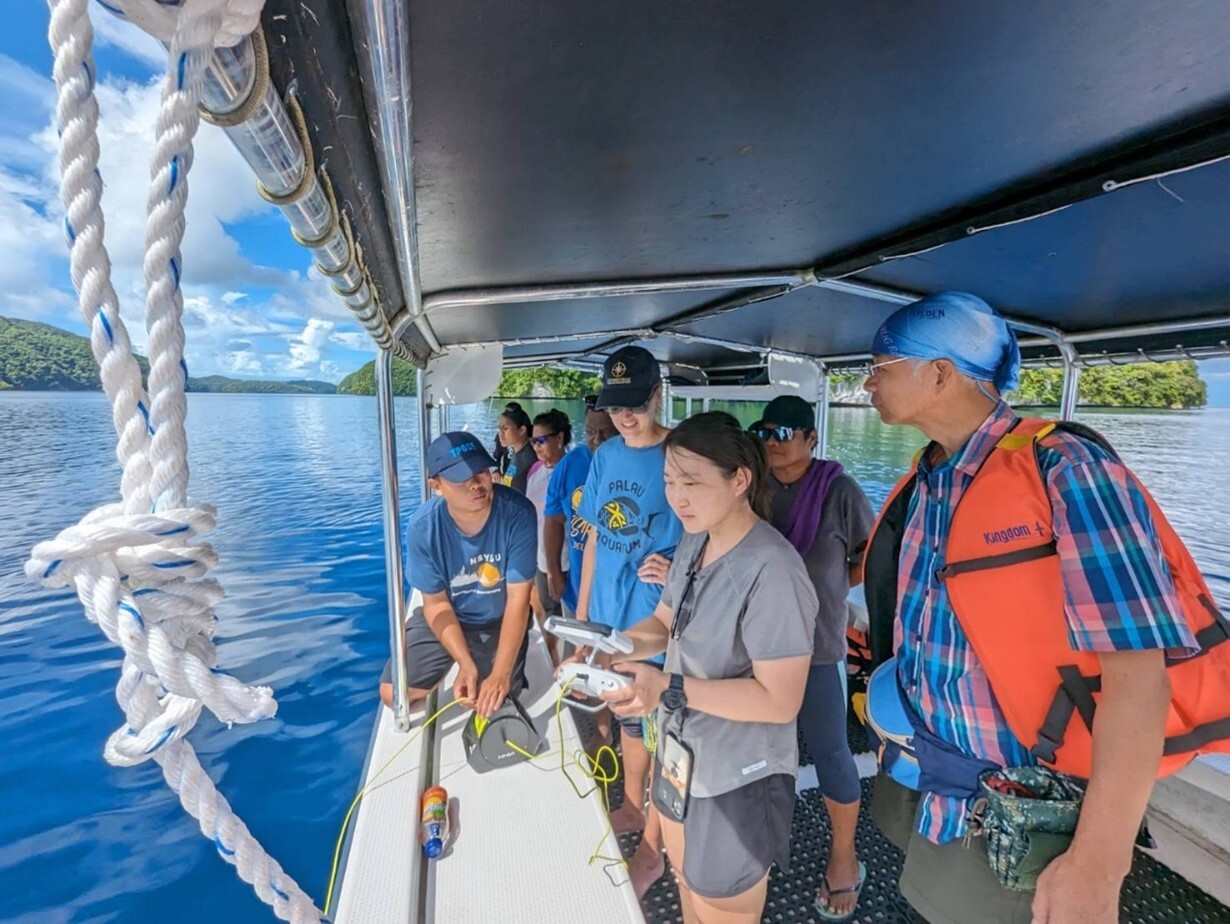
Figure 1: The Taiwan-Palau Ocean Science Education Team demonstrates to participants how to use a remotely operated underwater vehicle (ROV) to capture images of the seabed and marine life.
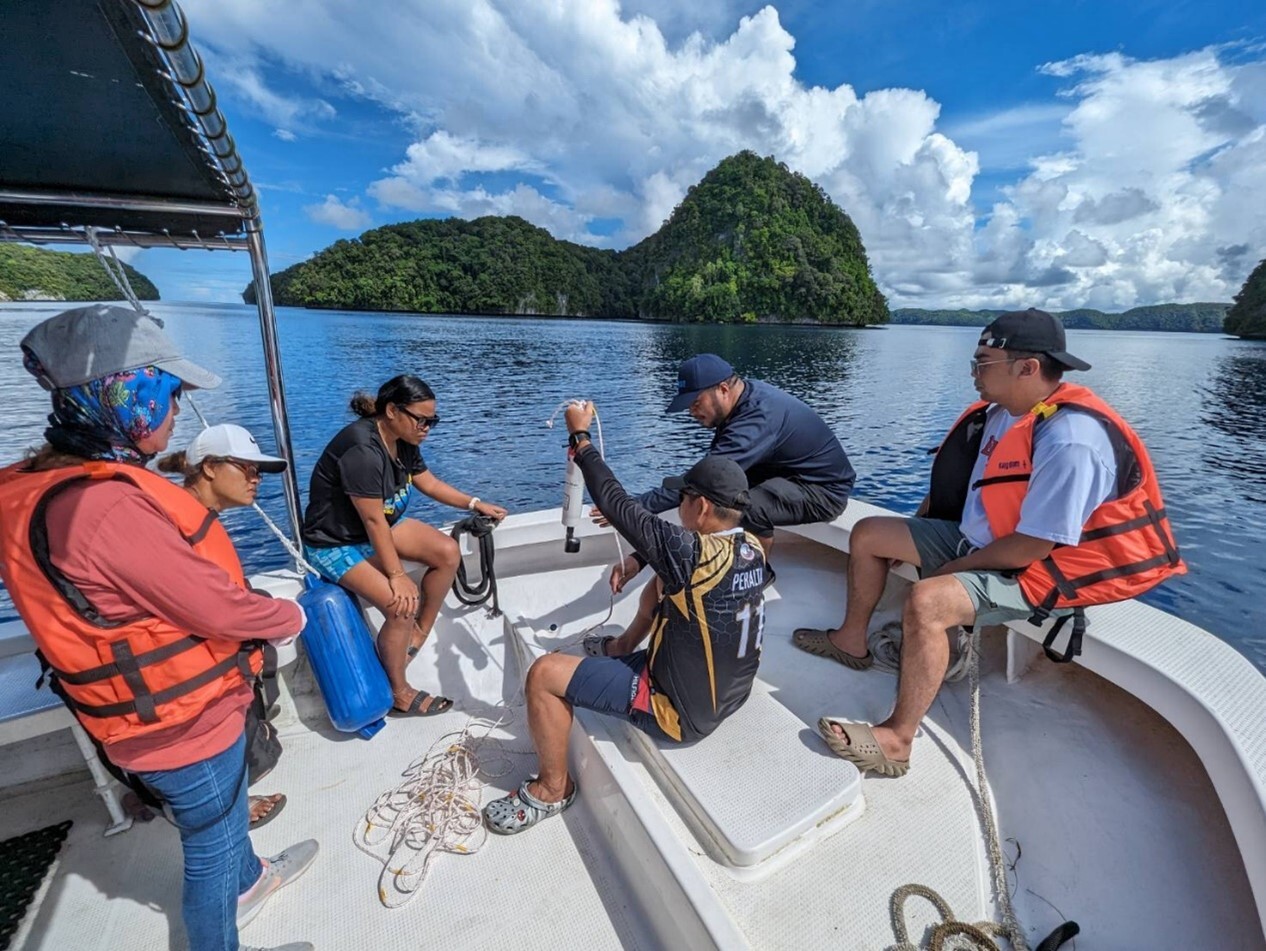
Figure 2: Participants learn to operate a CTD (Conductivity, Temperature, Depth) instrument in the waters of the Rock Islands to collect real-time temperature and salinity data at different depths.
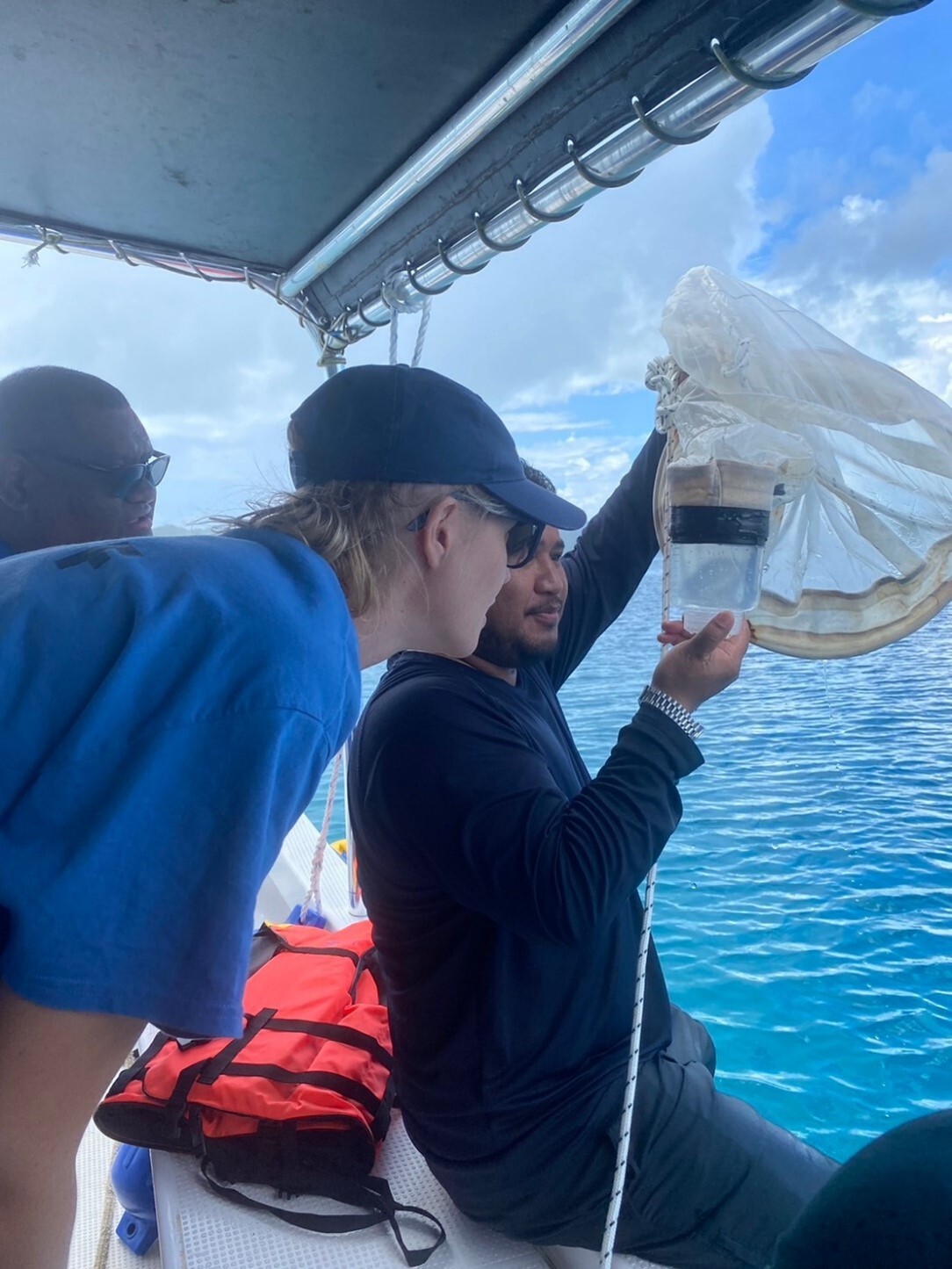
Figure 3: Doctoral student Vincent Abedneko from National Sun Yat-sen University (far right) explains to participant Lucy Dickie (center, wearing a hat) the possible types of zooplankton collected in the waters of the Rock Islands.
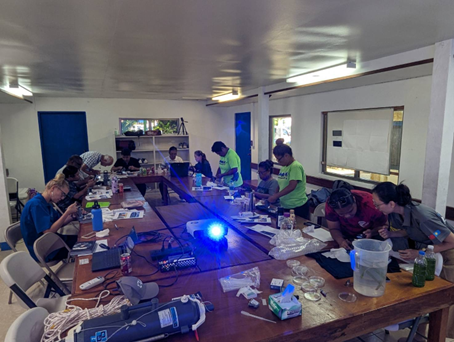
Figure 4: Professors Hsiu-Chin Lin (first on the right) and Mong-Fong Li (fourth on the left) from the Taiwan-Palau Ocean Science Education Team demonstrate to participants how to use a simple microscope to observe zooplankton.
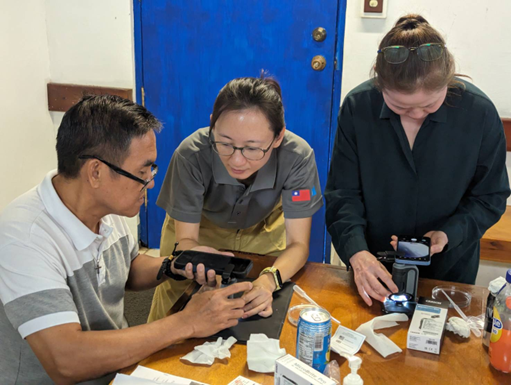
Figure 5: Professor Hsiu-Chin Lin (center) instructs participant Noel Reyes (far left) on how to adjust and use a simple microscope to record the movements of active zooplankton.
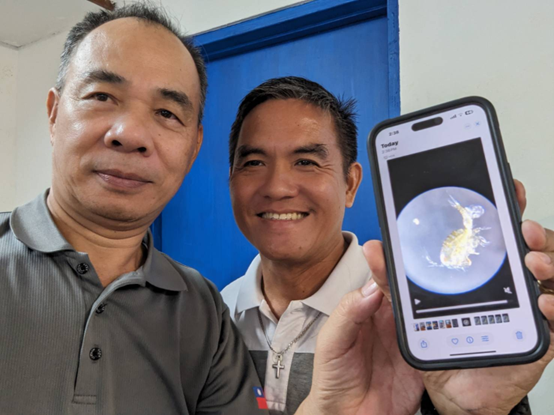
Figure 6: Participant Noel Reyes (far right) successfully demonstrates capturing an image of a zooplankton, a copepod, using a simple microscope.
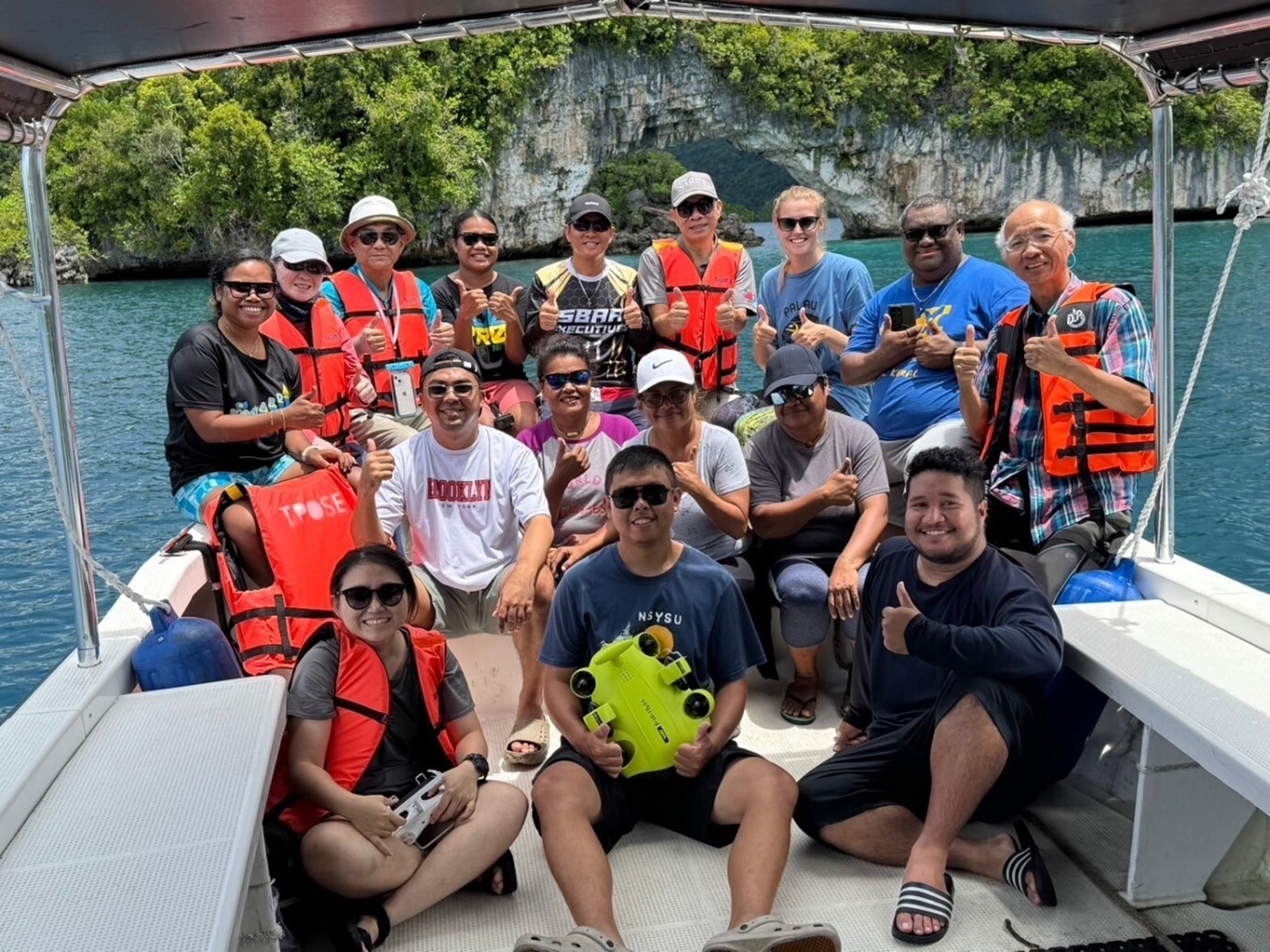
Figure 7: Participants take a group photo with the Taiwan-Palau Ocean Science Education Team at sea in Palau.
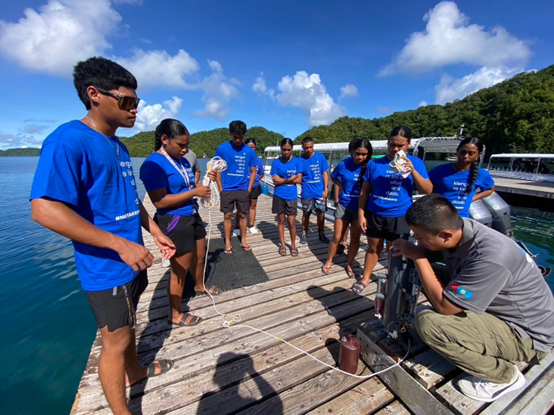
Figure 8: Dr. Hsieh (first on the right) from the Taiwan-Palau Ocean Science Education Team demonstrates the use of an underwater water sampler to young participants in Palau.
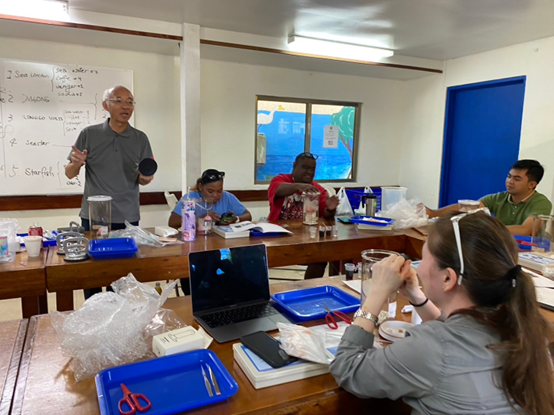
Figure 9: Professor Mong-Fong Li (first on the left) demonstrates to Palauan participants the principle of vacuum bottles and explains how marine organisms, such as sea urchins and octopuses, use suction cups for attachment and movement.
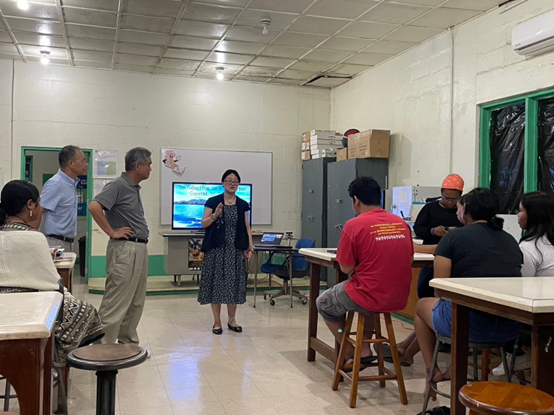
Figure 10: The Secretary of the Embassy of the Republic of China (Taiwan) in Palau (center) introduces students from Palau Community College (majoring in Environmental Science) to the process of applying for admission to universities in Taiwan and the opportunities to apply for Taiwanese scholarships.
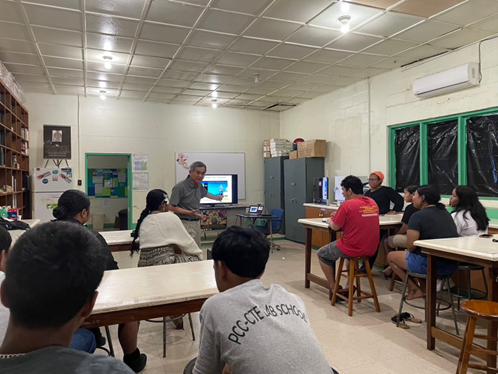
Figure 11: Professor Hung-Duen Yang (first in the front) delivers a lecture to Environmental Science students at Palau Community College on the applications of AI in science.
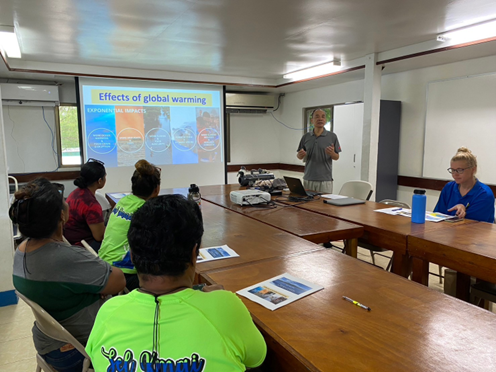
Figure 12: Professor Chin-Chang Hung (standing) lectures participants on the impacts and threats of global warming on Earth and humanity.